

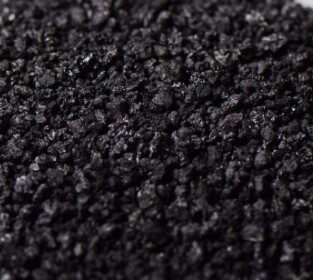
4 Carburizers You Should Know: A Guide to Properties, Applications & Selection
In metallurgy and foundry industries, carburizers are essential materials for adjusting the carbon content in molten metal, directly impacting the quality and performance of final products. Based on raw materials and manufacturing processes, mainstream carburizers fall into two primary categories: Regular Carburizers and Graphitized Carburizers. The regular type mainly includes Calcined Coal and Calcined Petroleum Coke, while the graphitized type encompasses Cylindrical Graphite Carburizer and Graphitized Petroleum Coke Carburizer. Understanding the characteristics of these four core products is fundamental for making optimal techno-economic decisions.
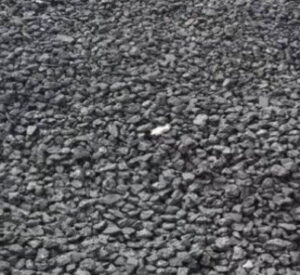
1. Calcined Coal Carburizer
- Typical Parameters: Fixed Carbon content usually 85%, 90%, or 95%; Sulfur ~0.5%; relatively high Nitrogen content.
- Raw Material & Process: Sourced mainly from Ningxia and Inner Mongolia, China. Produced by calcining high-quality anthracite at around 1200°C.
- Properties & Application: Features higher Nitrogen and Sulfur levels with relatively lower carbon absorption efficiency. It is an economical base material, primarily suitable for standard gray iron and some steelmaking applications where nitrogen content is not critical.
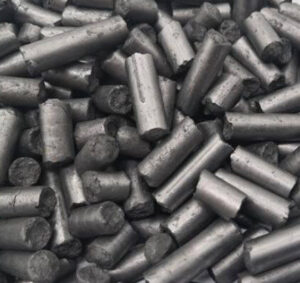 2. Cylindrical Graphite Carburizer
- Typical Parameters: Fixed Carbon generally 90% or 95%; very low Sulfur (≤0.08%); Nitrogen between 500-800 ppm.
- Raw Material & Process: Manufactured by compressing natural flake graphite or recycled graphite electrode material into uniform cylindrical pellets.
- Properties & Application: Known for its consistent low-sulfur, low-nitrogen properties, it effectively promotes graphite nucleation and reduces chill tendency in castings. It is the most widely used and cost-effective choice for ductile iron and high-quality gray iron production.
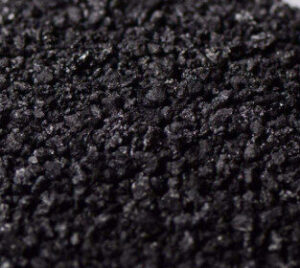 3. Calcined Petroleum Coke Carburizer
- Typical Parameters: Very high Fixed Carbon (≥98.5%); but also high Sulfur (≤0.5%); Nitrogen content is also elevated.
- Raw Material & Process: Produced by calcining raw petroleum coke at approximately 1400°C to remove volatiles.
- Properties & Application: Offers very high fixed carbon content, but its high sulfur level limits its use in low-sulfur applications. Mainly used for certain types of gray iron with higher sulfur tolerance and general steelmaking.
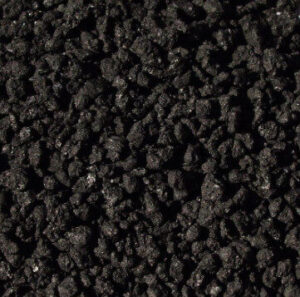 4. Graphitized Petroleum Coke Carburizer
- Typical Parameters: Extremely high Fixed Carbon (≥98.5%); very low Sulfur (≤0.05%); low Nitrogen (~300 ppm).
- Raw Material & Process: Made from calcined petroleum coke treated in a graphitization furnace at temperatures up to 3000°C, which transforms the carbon structure into an ordered graphite crystalline form.
- Properties & Application: This represents the premium-grade carburizer on the market today. Its high degree of graphitization results in fast carbon dissolution, exceptionally high absorption rates, and minimal impurities. It is specifically recommended for high-end ductile iron, specialty steelmaking, and applications demanding superior carbon absorption efficiency and final material purity.
Conclusion
Selecting the right carburizer requires a balanced consideration of key parameters like Fixed Carbon, Sulfur, and Nitrogen against their impact on your final product, as well as overall cost-effectiveness. For users pursuing ultimate material performance and consistent production results, Graphitized Petroleum Coke Carburizer stands out as the optimal choice available today. It not only significantly enhances metallurgical quality but also offers better process control and superior overall cost efficiency through its higher absorption rate.
Get in Touch for Your Tailored Solution:
-
Tel: +86 187 9080 5686
-
WhatsApp/WeChat: +86 187 9080 5686
-
Email: info@sgdalloy.com