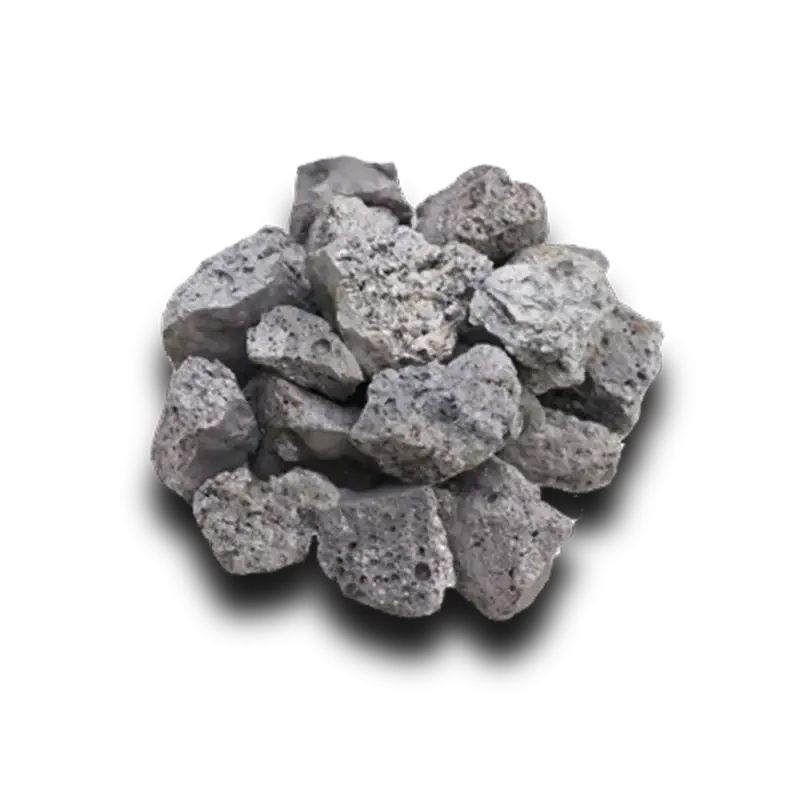
Product Description
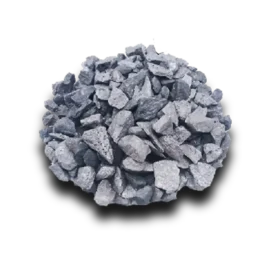
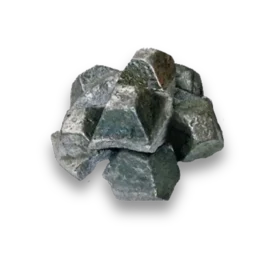
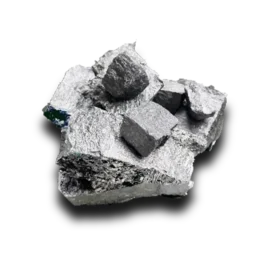
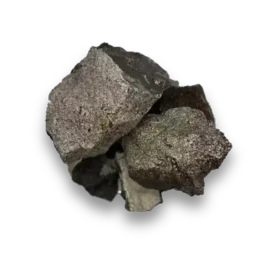
Ferrophosphorus is a ferroalloy mainly composed of phosphorus (P) and iron (Fe). Its core use is as a phosphorus additive in metallurgy to adjust the properties of steel or cast iron, and it can also be used as a deoxidizer or alloying agent.
- Composition: Core elements are phosphorus (15%-30%) and iron (≥60%-80%), with impurities like silicon (≤4%), manganese (≤2%), and carbon (≤1%). Higher phosphorus strengthens its ability to adjust metal properties, but excess causes steel cold brittleness.
- Physical: Silver-gray to dark gray solid at room temperature; brittle, easy to break. Melting point: ~1100-1250°C; density: ~6.8-7.2 g/cm³. Insoluble in water, stable at room temperature, but reacts with oxygen/sulfur at high temperatures.
- Metallurgical: Proper addition boosts steel’s hardness, wear resistance, and corrosion resistance. It also has mild deoxidation capacity. Note: Phosphorus reduces steel’s low-temperature toughness, so dosage must be precisely controlled.
Applications
- Steel & Cast Iron:
- Adds to low-alloy structural steel/spring steel to enhance hardness and wear resistance.
- Improves molten iron fluidity, reduces casting shrinkage, and enhances surface finish in gray cast iron.
- Controls phosphorus (≤0.15%) in railway rails/wear-resistant parts to balance hardness and avoid cold brittleness.
- Special Alloys: Used in phosphor bronze/brass production—acts as a deoxidizer for molten copper and improves alloy machinability/corrosion resistance .
- Others: Serves as a phosphorus source for lithium iron phosphate (lithium battery cathode); used in fireworks/signal flares for specific flame effects via phosphorus combustion.
Specifications
| Grades | Chemical Composition(%) | ||||||
| P | ≥Fe | Si≤ | Mn≤ | C≤ | S≤ | P≤ | |
| FeP28 | 25-30 | 65 | 3.5 | 2 | 0.8 | 0.15 | 30 |
| FeP24 | 22-26 | 68 | 3.5 | 2 | 0.8 | 0.15 | 26 |
| FeP20 | 18-22 | 72 | 4 | 2.5 | 1 | 0.2 | 22 |
| FeP18 | 16-20 | 75 | 4 | 2.5 | 1 | 0.2 | 20 |