

Product Description
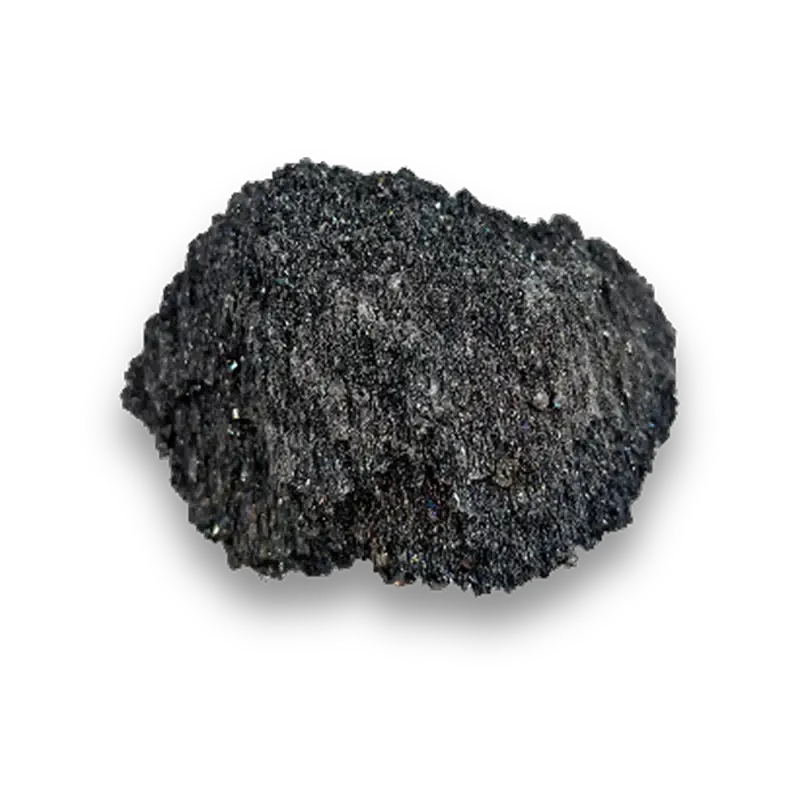
Silicon Carbide (SiC) is a synthetic compound formed by covalent bonding between silicon and carbon. The mainstream production processes are the Acheson process (low-cost mass production with relatively low purity) and the Physical Vapor Transport (PVT) method (high-purity single crystals for semiconductors).
- Physical Properties: Mohs hardness of 9.5 (close to diamond), high temperature resistance (long-term use at 1600℃), and high thermal conductivity (nearly 1/3 that of copper);
- Chemical Properties: Resistant to strong acids and alkalis (except hydrofluoric acid), and forms an oxide protective layer on the surface at high temperatures;
- Electrical Properties: Wide bandgap (3 times that of silicon) and high breakdown field strength (10 times that of silicon), suitable for high-voltage, low-loss devices.
Applications
- Semiconductor/Electronics: New energy vehicle inverters, photovoltaic inverters (using SiC MOSFETs, featuring small size and low energy consumption);
- Aerospace: Turbine blades, spacecraft thermal protection tiles (high temperature resistance and thermal shock resistance);
- Energy/Environmental Protection: Nuclear reactor fuel rod cladding, heat exchangers for solar thermal power generation (resistant to extreme environments);
- Industrial Wear Resistance: Mine pipeline liners, grinding balls (wear resistance 100 times that of metals).
Specifications
| Grades | Chemical Composition(%) | |||||
| SiC≥ | F.C≤ | Fe2O3≤ | SiO2≤ | Al2O3≤ | Other≤ | |
| SiC98.5 | 98.5 | 0.2 | 0.1 | 0.3 | 0.1 | 0.5 |
| SiC97 | 97.0 | 0.5 | 0.4 | 0.5 | 0.3 | 1.0 |
| SiC95 | 95.0 | 0.5 | 0.7 | 1.0 | 0.5 | 1.5 |
| SiC90 | 90.0 | 1.0 | 1.0 | 1.5 | 1.0 | 2.0 |
| SiC80 | 80 | 2.5 | 2.0 | 8.0 | 1.5 | 3.0 |
| SiC70 | 75 | 3.5 | 2.0 | 12.0 | 1.5 | 3.0 |